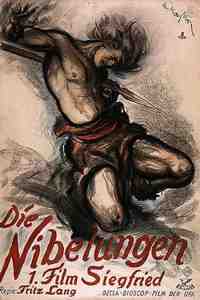
Die Nibelungen (“The Nibelungs”) is a series of two German silent fantasy films released in 1924 based on the epic Germanic poem Nibelungenlied (“The Song of the Nibelungen”), which was written around 1200 AD by an unknown author. It tells the story of a young hero named Siegfried (Paul Richter), son of King Siegmund of Xanten. While learning the art of sword forging from the great blacksmith Mime (Georg John), Siegfried learns of the great city of Burgundy, the knights who protect it and the kings who rule it. He also learns of the beautiful princess who resides there, Princess Kriemhild (Margarete Schön). Immediately infatuated with her, Siegfried sets off on a quest to win Kriemhild’s heart and hand. Along the way, he faces many trials and tribulations befitting a prototypical epic journey that is present in many myths. He slays the dragon Fafnir, discovers cursed dwarven treasure, and engages in a contest of strength with Brunhild, the Queen of Iceland (Hanna Ralph).
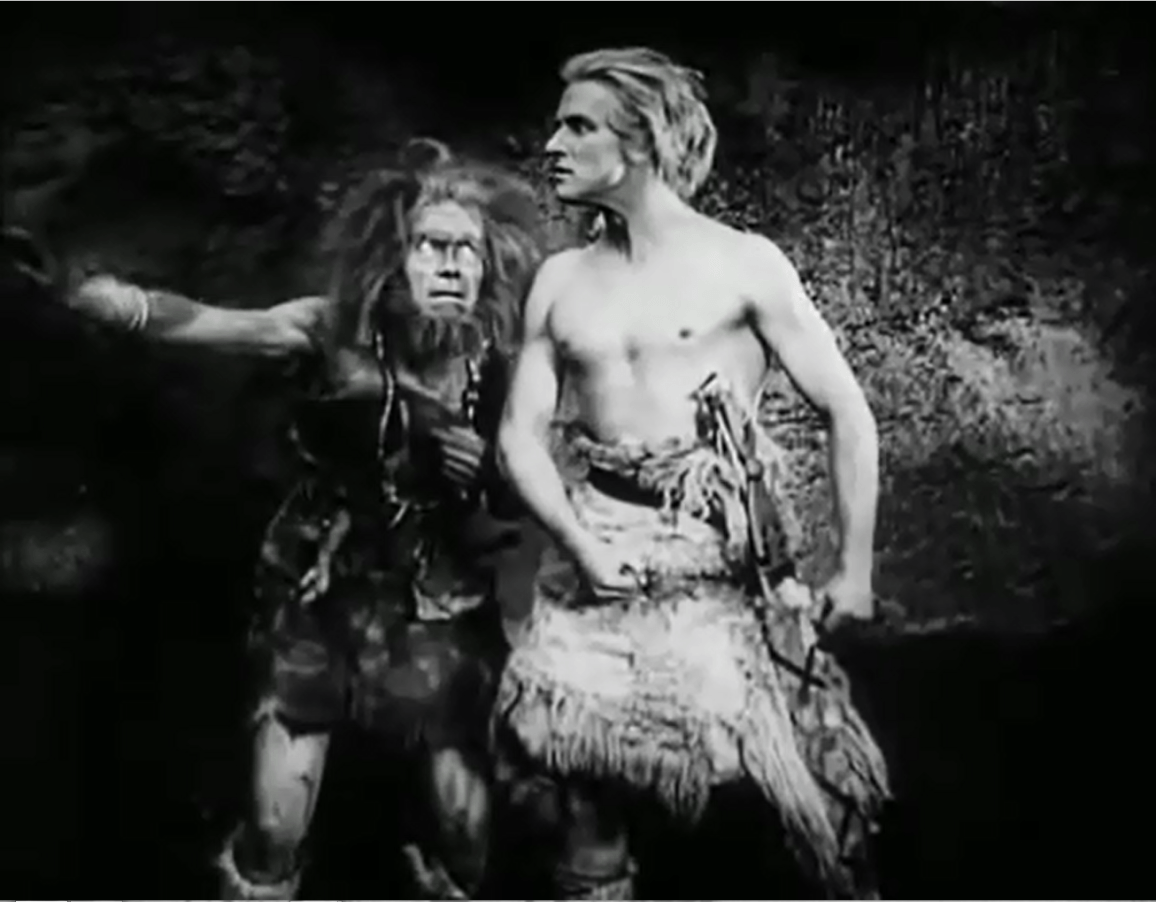
“So to get to Burgundy, you gotta go about 5 miles through the woods, then turn right at the dragon’s lair (You can slay it if you want, that’s up to you), then you’ll meet a dwarf that’ll tell you where to go from there. If you see some Huns, you’ve gone too far.
Die Nibelungen was directed by the master of German Expressionism and Darkness, Fritz Lang, who would go on to direct other cinematic masterpieces like Metropolis (1927) and M (1931). The script for Die Nibelungen was written by Lang’s wife, Thea Von Harbou, who collaborated with Lang as the screenwriter on a multitude of his films, including the ones I just mentioned. And just like M and Metropolis, the writing and direction for Die Nibelungen are absolutely perfect. While it’s not a film that is solely driven by its narrative, it is nonetheless a story that manages to derive a flood of emotions from the audience through its characters, their actions, and the consequences that come from those actions. They may be familiar mythological archetypes, but their stories and motivations are delivered in a way that makes them feel like real people, even when these people are doing fantastical things like killing a dragon or turning invisible via a magic net. A lot of that believability comes from the acting, which is also superb. It’s the kind of acting you don’t see much of anymore since the silent era format required an abundance of exaggerated facial expressions and body language. Still, you have no doubt in your mind about what the characters are thinking or feeling. You could potentially ignore the intertitles all together, and still have a firm grasp on what’s happening in the film. Die Nibelungen could also be considered something of a fantasy genre trendsetter since it contains themes and aesthetic choices similar to other future fantasy titles like Game of Thrones and Lord of the Rings, and Die Nibelungen was released thirteen years before Tolkien published The Hobbit. It’s also no secret that Tolkien took a lot of inspiration from Germanic myth when creating the world of Middle-Earth.
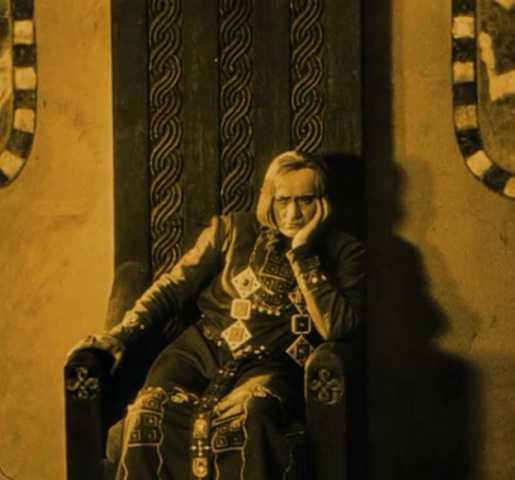
Pretty much me on any given day of the week.
I shouldn’t be surprised that Die Nibelungen looks as visually stunning as it does. We are talking about the director of Metropolis, after all. But even so, I’m still blown away by the size and scale of the film. We travel through dark and misty woods, medieval castles, caves, and rivers filled with cursed and stolen treasure and the barbaric land of the Huns. The environments were created in a simple enough manner, with matte paintings and models used to fill in the wide space and backgrounds along with standard interior and exterior sets, but the film is shot in such a beautiful and entrancing way that draws you into every single scene. I’m hard-pressed to find a shot in this movie that didn’t impress me.

The only time I felt that the film was showing its age was when we see Siegfried fight the dragon. It clearly looks like a puppet, and it does look a bit gauche, but there was a lot of effort put into its design and mechanics. In my Dragonslayer review, I mentioned that Fafnir was one of my personal favorite movie dragons, and I stand by what I said. It seems a bit primitive now, but it was an ambitious special effect that paved the way for future dragons in popular media and how they’re made and portrayed. Without Fafnir, we wouldn’t have Verthmitrax Pejorative from Dragonslayer, we wouldn’t have Daenerys’ dragons from Game of Thrones, and we certainly wouldn’t have Smaug from The Hobbit. Also, Fafnir was around fifty feet long and breathed real fire. I can’t turn my nose up at that.
Die Nibelungen is a movie that I can geek out about all day, but I don’t believe my words can honestly do it justice. It’s a cinematic fantasy experience that I highly recommend, and is one of the highlights of German silent film. The only “bad” thing I can say about it concerns its length. The film was originally split into two parts, with Part one titled Siegfried, and Part two Kriemhild’s Rache (“Kriemhild’s Revenge”). Both parts clock in at about two hours and twenty minutes, with a total runtime of approximately four hours and forty minutes. I’m not so blinded by the film’s masterful execution to not notice that it’s abnormally long and a bit on the slow side, but I was so enamored with it, it felt more like two and a half hours rather than four. Considering that Lang and von Harbou already had a propensity for making multi-part films with larger than average runtimes like The Spiders and Dr. Mabuse, The Gambler, it’s not exactly an unusual feature for this film to have. You’ll probably have to clear your schedule, but trust me, it’s worth it.
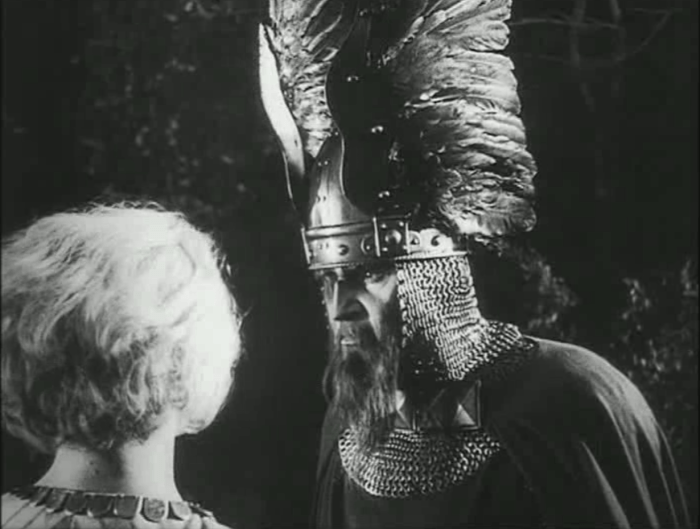
“Be honest. Does this hat make me look silly?”

 The Bard of the Reel