The “Deal with the Devil” motif is a cultural staple that has endured for centuries. We’ve seen this story play out in multiple ways across multiple mediums, such as books, music, paintings, and films. The Picture of Dorian Grey, Rosemary’s Baby, Phantom of the Paradise, Bedazzled, and even Disney movies like The Little Mermaid have pulled from this motif. It’s so ingrained in our cultural consciousness we’ve even made claims that people in real life have made deals with the Devil, like the famous legend of influential blues singer Robert Johnson, who reportedly sold his soul to Old Scratch in exchange for musical talent. The caveat was a premature death at the age of 27. Why are we still fixated on this trope after almost two millennia of rumors, legends, and stories? Christopher Marlow’s and Johann Wolfgang von Goethe’s versions of the Faust legendmay have had something to do with it. It’s a fairy tale with some occasional splotches of nonsensicality. But both writers gave the person agreeing to the Deal a relatable face, as opposed to older versions of the story, which were mainly excuses to have vulgar fun. It made people think about the consequences of sacrificing their moral integrity to gain wealth, power, and security, and how the road to hell is paved with good intentions. Lessons we still haven’t learned, I’ve noticed. Faust has been adapted multiple times since its inception roughly in the 16th century. But F.W. Murnau’s silent film version stands out, to me, as one of the best adaptations of the story and one of the greatest films of the Golden Age of German Cinema.
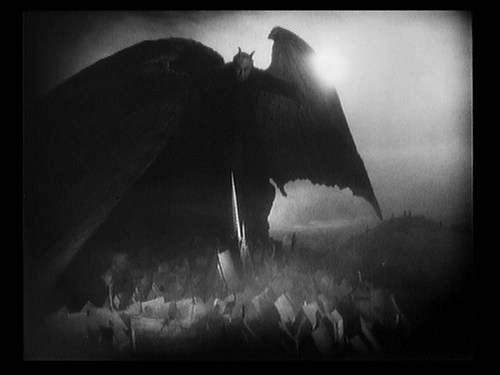
Until Metropolis was released the following year, Faust was the most expensive production that Universum Film AG, the production company, had made. It cost about 2 million reichsmarks to make, which translates to around 4 million dollars today. Many of the effects still stand the test of time even almost one hundred years later, and even if some of them are dated, they still impress with their ingenuity and timelessness. One of the most recognizable shots of the movie is a giant Mephisto (Emil Jannings) ominously floating over a small village with his massive black wings obscuring the town in shadow as he sends a plague down upon the townspeople. This is an image that Disney would later borrow and pay homage to in the Night on Bald Mountain segment in Fantasia. Disney sure likes their satanic symbolism, don’t they?

Another great scene is when Mephisto casually pursues Faust (Gösta Ekman), and does this by teleporting via a rudimentary fade effect. Being an F.W. Murnau production, the film is partially a horror, and the clunkiness of the effects manages to aid in the horror’s efficacy. The effect’s impact would diminish if it were much more clean and stylized. This movie is so elegantly constructed and well thought out that even its potential weaknesses are its strengths. Then there’s the existential horror at play, like when Faust loses all faith in himself and God as his search for a cure for the plague becomes completely hopeless. In a frenzy of frustration and rage, he burns his books. As a bibliophile, this horrifies me.
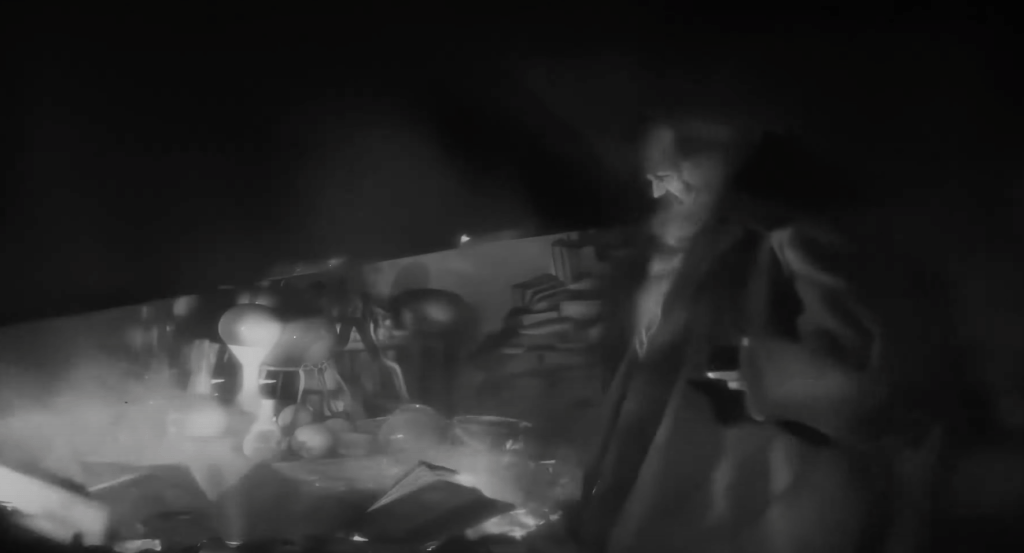
Oh God, not my Batman comics!
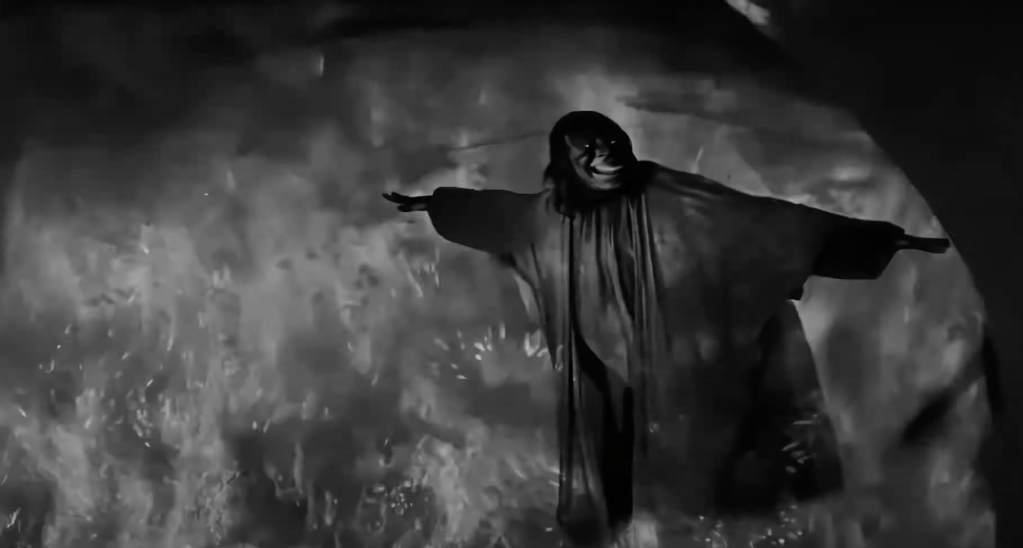
This movie also has some great model work. Mephisto and Faust fly across the land on a magic carpet while an in-depth model of the earth unfolds beneath them. Trees, waterfalls, rivers, towns, mountains, and fields go by in seconds, indicating their supernatural speed. The restoration of Faust’s youth is also a great looking and creative use of filmmaking technology. Mephisto doesn’t just snap his fingers and make Faust young. No, he makes him sleep, covers him in a blanket, fans the flames in his fireplaces with his breath while growing in size, becomes immersed in shadow, and his impish features are highlighted when the entire room erupts into flame. Then he pulls the blanket off of Faust, who has essentially been baptized by fire with his old features burned away to reveal a younger visage. That is brilliant filmmaking.
As I said, the models and effects aren’t the most realistic, but they look distinct and imaginative. Murnau was much more interested in making his films feel uniquely nightmarish rather than realistic. Other films he made, like Nosferatu or The Last Laugh, are prime examples of how he infuses surrealism and horror in his sets to tell his story. It’s a setting caught between the precipice of darkness and light with buildings, stairways, and hallways that are jagged and distorted. The people look a tad off, and it feels like there’s something around the corner, rubbing their hands in evil anticipation. In this case, it’s literally the Devil.
As much as I love to gush about this movie, a couple of hiccups need to be addressed. Namely, the stale romance between Faust and Gretchen (Camilla Horn) and the one-sided rom-com antics between Mephisto and Gretchen’s aunt Marthe (Yvette Guilbert). Neither of these romantic subplots were well received at the time of the film’s release, and I can understand why. It does noticeably slow the movie and tonally clashes with how the film begins and ends. Faust and Gretchen aren’t the most fascinating couple to watch, and it’s the sort of relationship where the female suffers the consequences of the male’s mistakes. By the time Faust attempts to make it right, which is too little too late, one wonders if Faust even deserves her. But in all fairness, these subplots are essential for setting up the dark climax of the film, and they help to deliver its final point. Said point will either give you a feeling of bittersweet catharsis or it will make you retch with its sappiness. It will depend on what kind of person you are, I suppose. I did a little of both on my first watch.
Despite the slightly marred middle and end, Faust is a great movie. It’s one of the finest examples of German silent film, and it goes above and beyond the call of duty to retell this time-worn fable with its weird yet innovative style and somber yet powerful emotional storytelling. The story may be very familiar, but the experience is unlike any other.
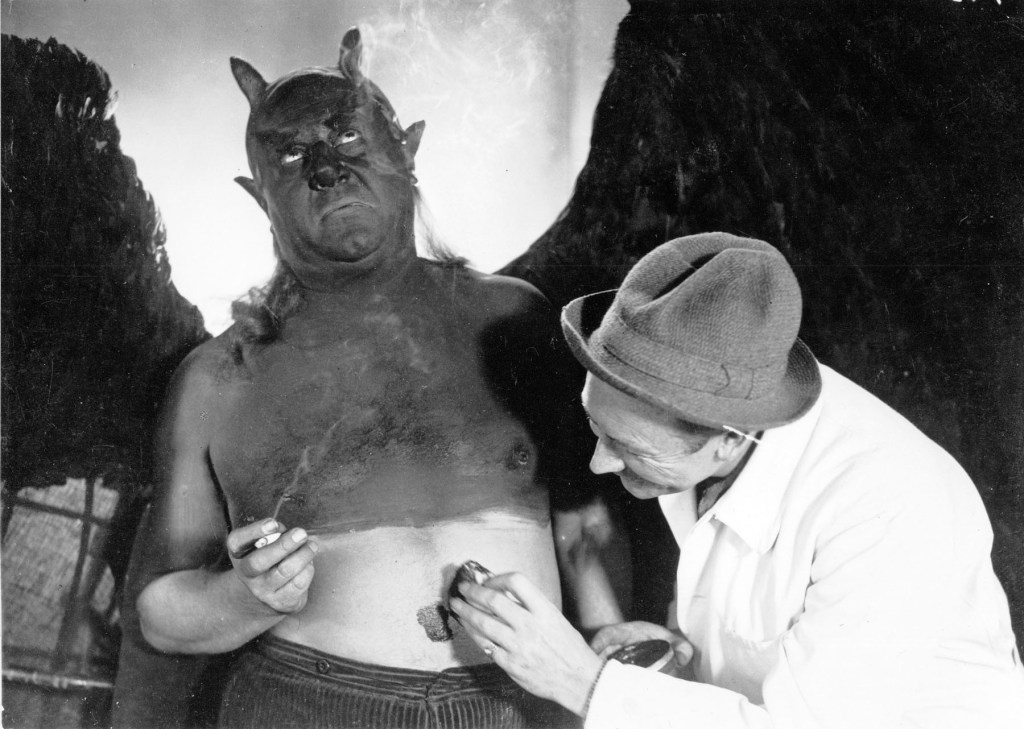
I don’t have a joke here, I just think this BTS photo is funny.

 The Bard of the Reel